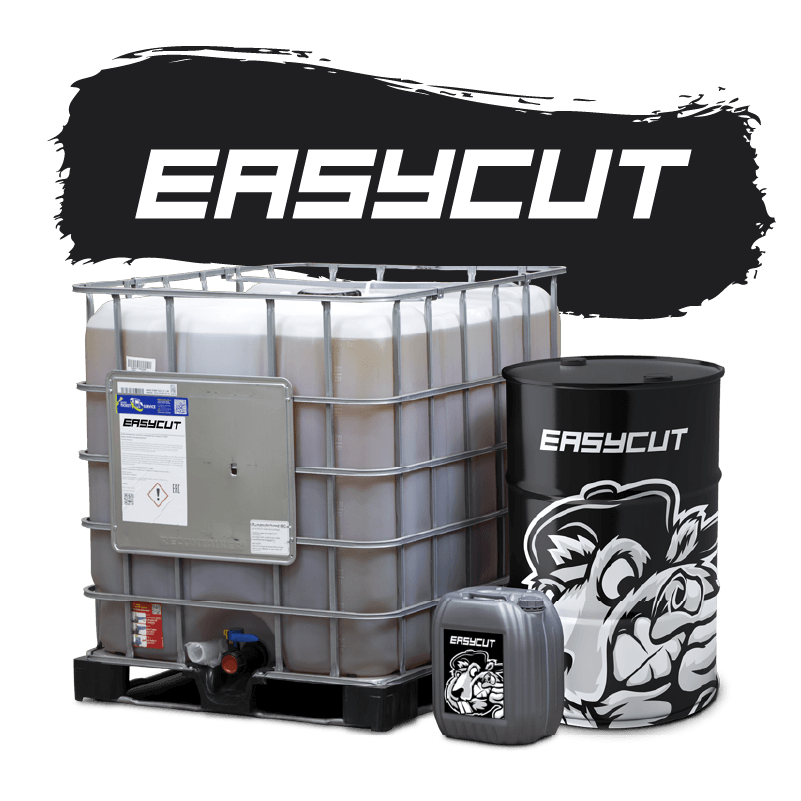
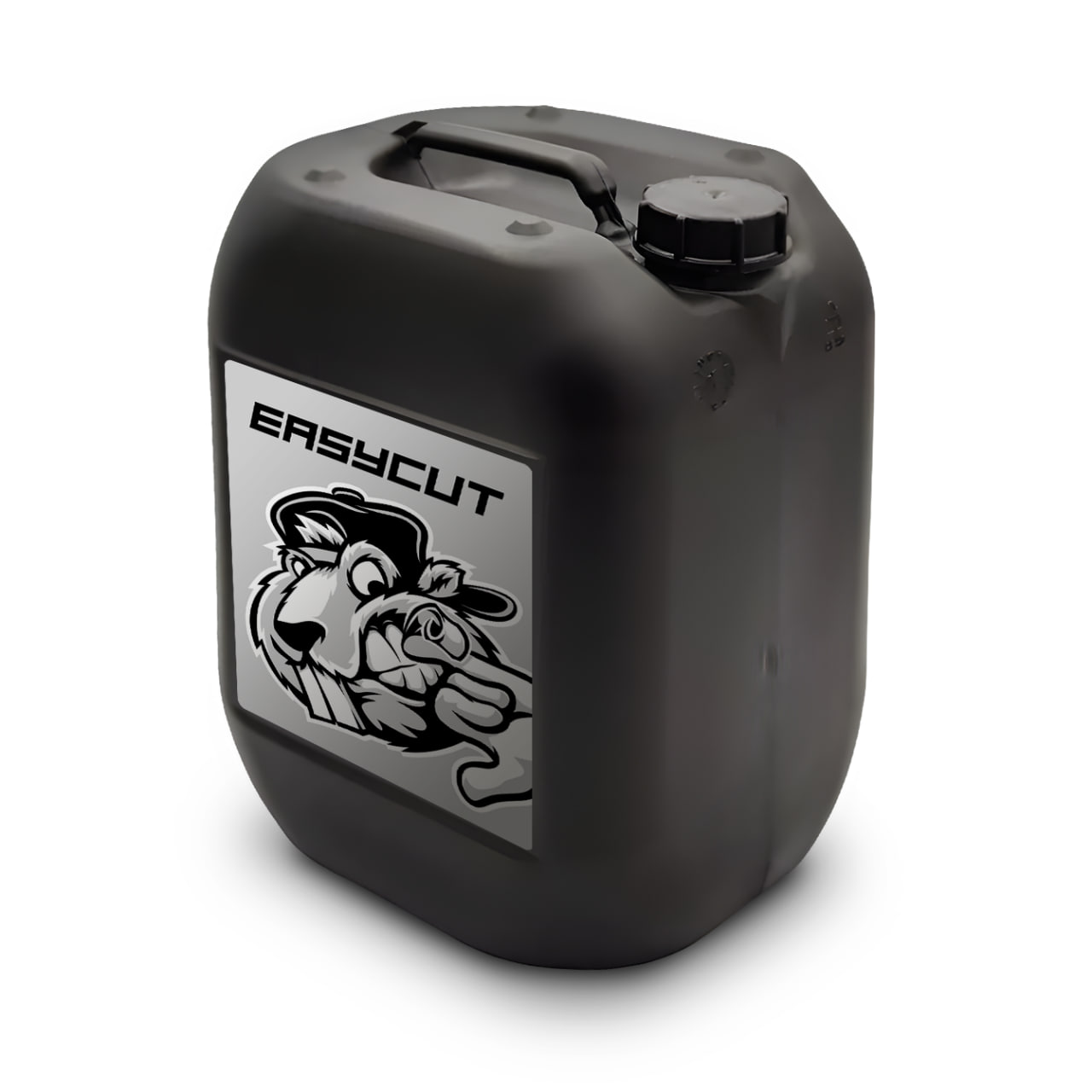
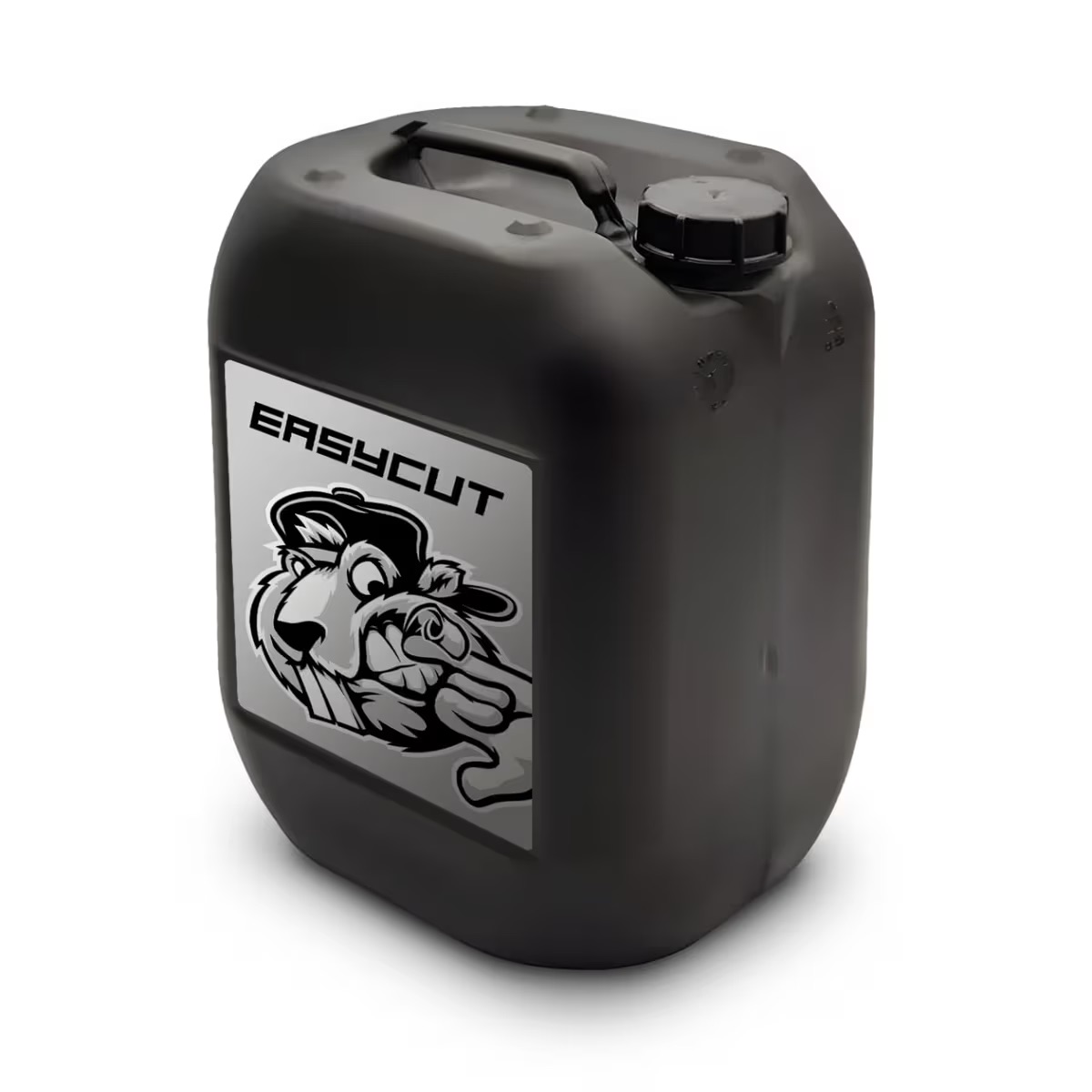
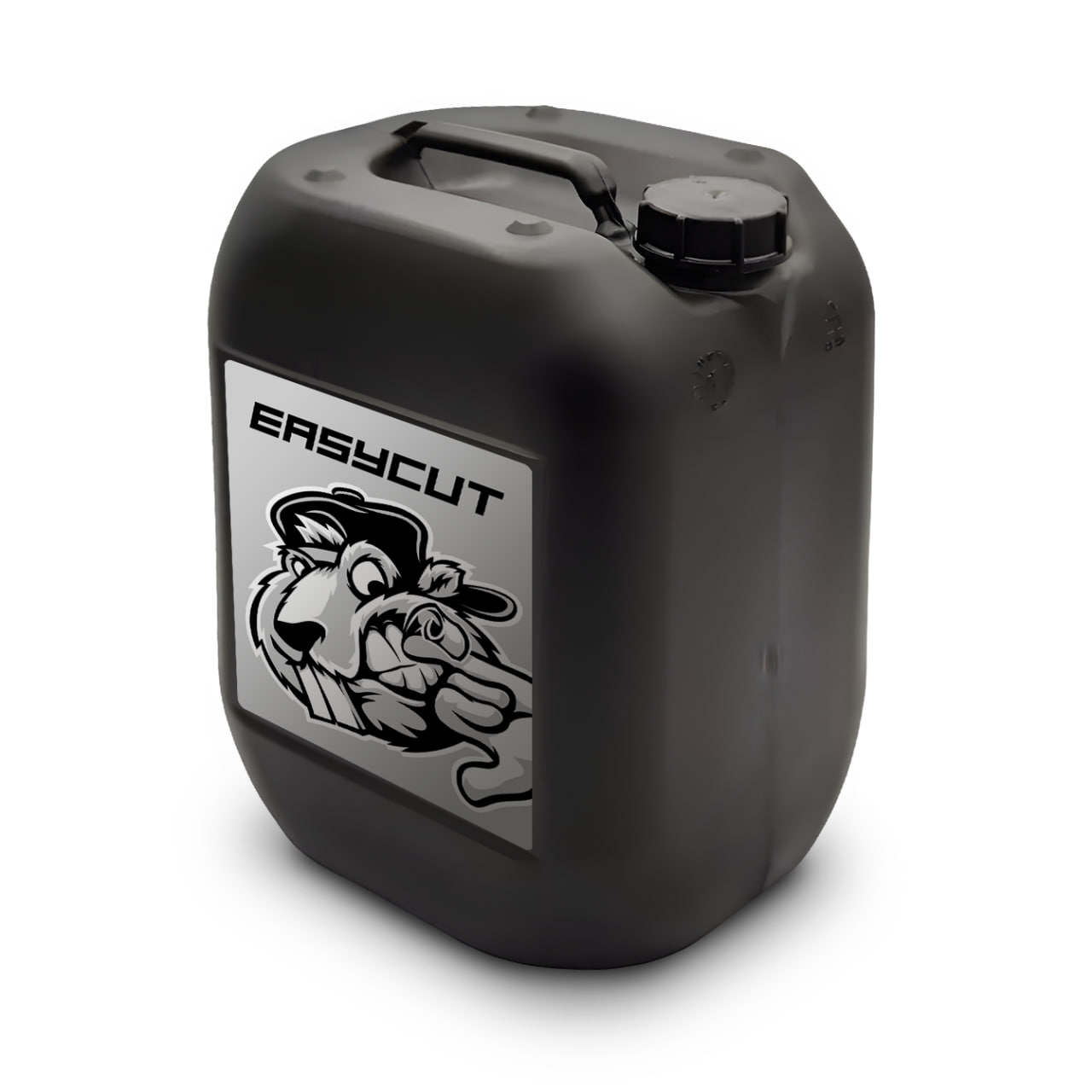
EASYCUT metalworking coolants, made in Bavaria. Six concentrates for turning, milling, grinding and EDM — for steel, cast iron, aluminium and high-alloy materials. Prices and stock are on every product page, order without asking for a quote.
You are buying concentrate, not ready-mixed emulsion. A 19-litre canister makes about 240 litres of coolant in the tank at 8 %, a 208-litre drum about 2600. The price on the container is not the price per litre of emulsion.
The three main products build on each other — each step covers more materials than the one below:
Kühlschmierstoff, Kühlschmiermittel, KSS, Bohrmilch, Schleifwasser — in den Werkstätten heißt dasselbe Medium sehr Unterschiedliches, und gemeint ist fast immer ein wassermischbares Konzentrat. Genau das finden Sie hier: sechs EASYCUT Konzentrate, hergestellt in Bayern, für Drehen, Fräsen, Schleifen und Erodieren.
Welches Kühlschmiermittel Sie brauchen, entscheiden vier Dinge: der Werkstoff, das Verfahren, die Schnittbedingung und Ihr Wasser. Danach ist dieser Katalog gefiltert.
Welcher Kühlschmierstoff für welche Bearbeitung
Die drei Hauptprodukte bauen aufeinander auf. Es sind keine drei Spezialisten für drei Werkstoffe, sondern drei Stufen mit wachsendem Werkstoffbereich — Sie wählen also nicht „welches passt“, sondern „wie weit muss es reichen“.
BASE201 — Guss und Stahl. Der Einstieg. Wenn in Ihrer Werkstatt überwiegend Guss (K) und unlegierter bis niedriglegierter Stahl (P) läuft, reicht diese Stufe und Sie zahlen nichts für Reserven, die Sie nicht brauchen.
UNI301 — zusätzlich Edelstahl und Aluminium. Deckt Guss, Stahl, Edelstahl (M) und einen großen Teil der Aluminiumlegierungen ab. Die Stufe für Werkstätten mit gemischtem Programm, die nur einen Tank pflegen wollen.
PRO302 — alle Werkstoffe, stark bei Aluminium. Deckt den gesamten Bereich ab und ist speziell auf Aluminium abgestimmt, auch auf die Legierungen, bei denen die Stufe darunter an ihre Grenze kommt. Unser meistbestelltes Produkt.
Dazu zwei Sonderfälle, die nicht in diese Reihe gehören:
BVR301 — für hohe Belastung und schwere Zerspanung, wo Schmierleistung wichtiger ist als Reichweite über Werkstoffe.
VEG001 — esterbasiert, auf nachwachsenden Rohstoffen. Bessere Schmierleistung als Mineralöl, biologisch abbaubar, und die erste Wahl, wenn Hautverträglichkeit am Arbeitsplatz ein Thema ist.
Für das Erodieren steht das Dielektrikum EDM601 bereit — kein Kühlschmierstoff im engeren Sinn, deshalb finden Sie es auch unter dielektrische Flüssigkeit.
Filtern können Sie nach Werkstückmaterial (P, M, K, N, S, H), Bearbeitungsart, Mineralölanteil und Gebindegröße. Wenn Sie unsicher sind, schreiben Sie uns Werkstoff, Verfahren und Maschine — das ist in zehn Minuten geklärt.
Wassermischbar oder Schneidöl
Die kurze Antwort: schnell und heiß verlangt eine wassermischbare Emulsion, langsam und ziehend verlangt ein nicht wassermischbares Schneidöl. Über 90 Prozent der CNC-Bearbeitung läuft mit Emulsion, und das ist auch der Schwerpunkt dieses Katalogs.
Die ausführliche Antwort — semisynthetisch, vollsynthetisch, esterbasiert, Schneidöl und wofür jedes gedacht ist — steht in unserem Beitrag Arten von Kühlschmierstoffen. Was ein KSS im Schnitt überhaupt leistet, erklärt Aufgaben von Kühlschmierstoffen.
Gebinde und was daraus wird
Konzentrat gibt es in drei Größen, und der Unterschied ist größer, als der Preis vermuten lässt:
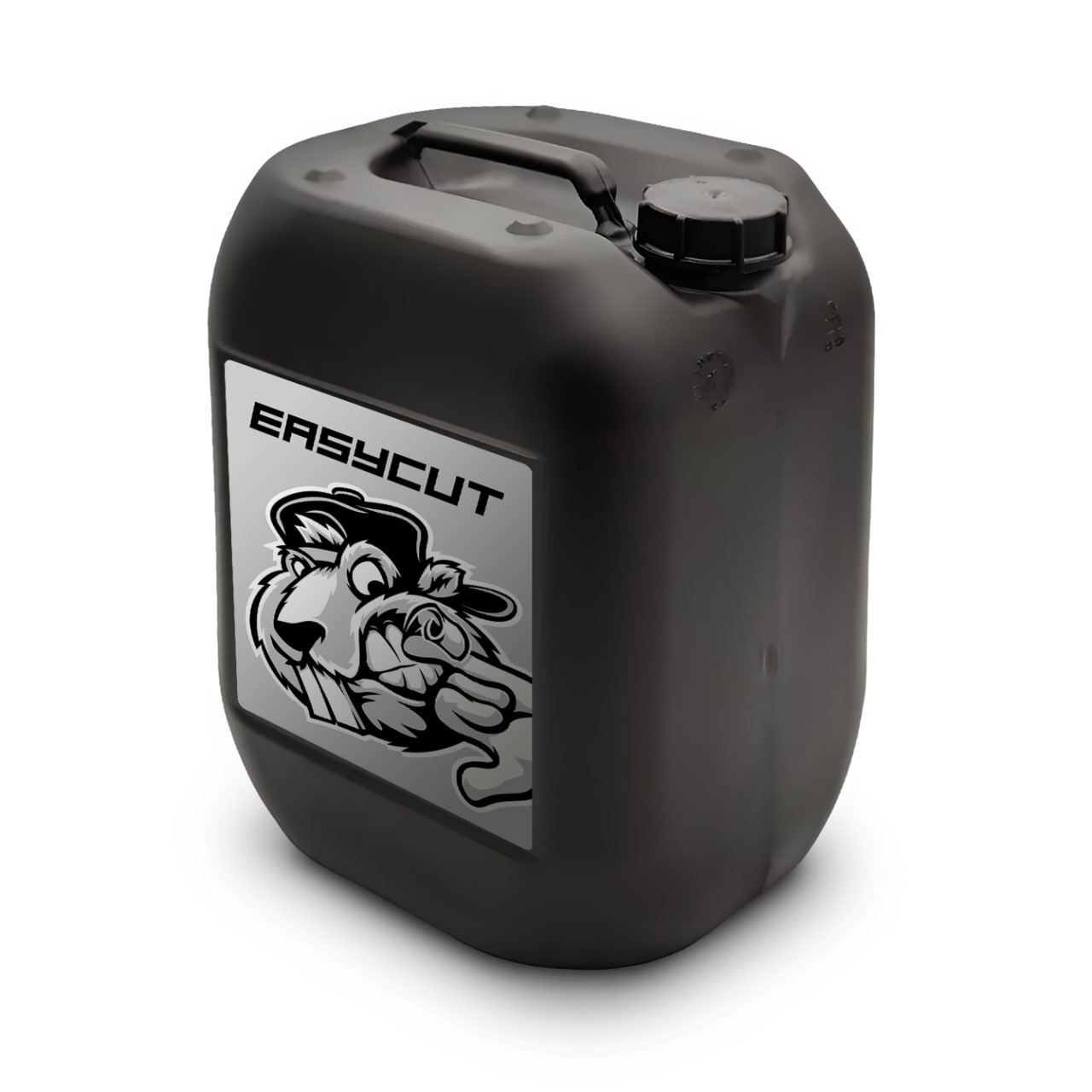
19 Liter (Kanister) — bei 8 % rund 240 Liter fertige Emulsion. Für eine Maschine oder zum Nachfüllen.
208 Liter (Fass) — rund 2600 Liter Emulsion. Ab zwei bis drei Maschinen die vernünftige Größe, dazu passt das Mischgerät zur Fassmontage.
1022 Liter (IBC) — rund 12 800 Liter Emulsion. Für Fertigungen mit eigener KSS-Versorgung.
Rechnen Sie nicht in Litern Konzentrat, sondern in Litern Emulsion — sonst vergleichen Sie Gebindepreise, die nichts miteinander zu tun haben. Der KSS-Rechner nimmt Ihnen das ab.
Ihr Wasser gehört zur Rechnung
Die fertige Emulsion besteht zu über 90 Prozent aus Ihrem Leitungswasser. Wasserhärte und Chloridgehalt unterscheiden sich in Deutschland regional erheblich — dasselbe Konzentrat läuft in Norddeutschland anders als in Bayern. Bevor Sie ein Medium verurteilen, prüfen Sie das Wasser: Wasserqualität und Konzentration richtig einstellen.
Zur Kontrolle im Betrieb gehören ein Refraktometer und, ab mehreren Maschinen, ein Mischgerät. Beides finden Sie unter Fluid Management.
Kühlschmierstoffe kaufen bei CNCmarket
Preise und Lagerbestand stehen auf jeder Produktseite, die Bestellung läuft ohne Angebotsanfrage. Kostenloser Versand innerhalb Deutschlands, Österreichs und der Schweiz. Hergestellt in Bayern.
Was nicht gelistet ist, beschaffen wir auf Anfrage. Und wenn Sie von einem anderen Medium wechseln: schicken Sie uns das Datenblatt Ihres jetzigen Kühlschmierstoffs, Ihre Werkstoffe und Ihre Wasserhärte — dann sagen wir Ihnen, welches Produkt passt, und auch, wenn ein Wechsel sich nicht lohnt.